Vegan Charcuterie Board
Impress your guests with a stunning plant-based charcuterie spread. Perfect for parties and entertaining.
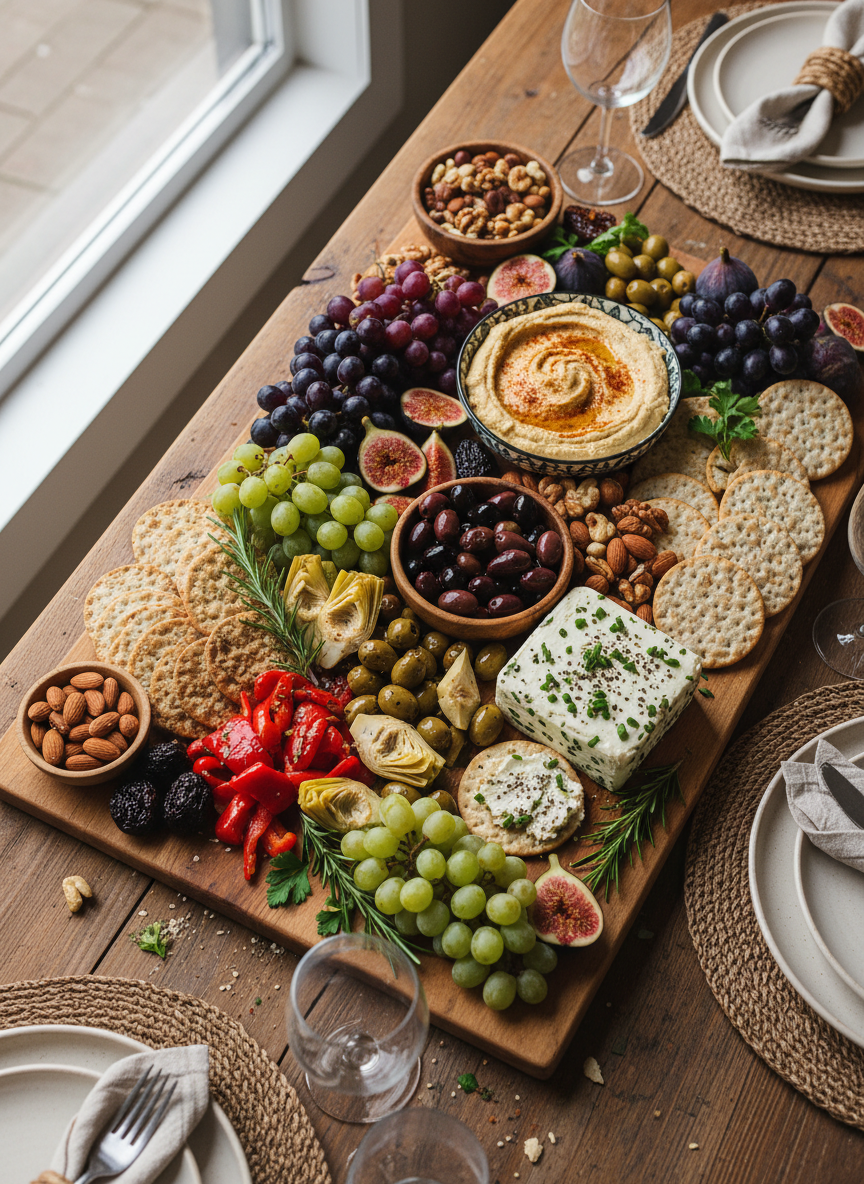
📋 Recipe
Ingredients
- 12 cups hummus
- 21 cup cashew cheese
- 31/2 cup olives (mixed)
- 4Crackers (assorted)
- 5Fresh and dried fruits
- 6Raw vegetables
- 7Nuts (almonds, cashews)
- 8Fresh herbs for garnish
Instructions
- 1
Choose a large board or platter.
- 2
Place small bowls of hummus, cashew cheese, and olives on the board.
- 3
Arrange crackers in fans around the bowls.
- 4
Add clusters of grapes, fig halves, and sliced apples.
- 5
Fill remaining spaces with cucumber rounds, cherry tomatoes, and roasted peppers.
- 6
Scatter nuts throughout. Garnish with fresh rosemary and thyme.
Vegan Charcuterie Board
Creating a stunning vegan charcuterie board is all about balancing textures, flavors, and colors to build a sophisticated spread that everyone will love, regardless of their diet.
Table of Contents
- The Art of the Vegan Board
- Selecting Your Plant-Based Cheeses
- Choosing Perfect Accompaniments
- Adding Fresh Produce and Garnishes
- Building Your Board: Step-by-Step
- Deep Dive: Flavor Balancing and Pairing
- Storage and Meal Prep Strategy
- Common Mistakes to Avoid
- Comparison: Store-Bought vs Homemade Elements
- Frequently Asked Questions
- Nutritional Considerations
- Related Articles
- Newsletter
- Conclusion
The Art of the Vegan Board
Building a vegan charcuterie board is an exercise in creativity. It moves beyond simple snacking to become a centerpiece for gatherings, parties, or even an indulgent solo meal. When you assemble a plant-based spread, the goal is to provide a variety of flavor profiles—salty, sweet, acidic, and savory—that keep guests coming back for more.
Unlike traditional boards that rely heavily on meat and dairy, a vegan board leans into the incredible diversity of plant foods. By using high-quality vegan pantry staples, you can build a display that feels both bountiful and intentional. The key is in the layering; you want to create a visually appealing landscape where each item feels accessible and enticing. Think of the board as a canvas where the colors of fresh berries, the deep earth tones of nuts, and the vibrant hues of pickled vegetables create a feast for the eyes before the first bite is even taken.
Selecting Your Plant-Based Cheeses
The foundation of any great board is its cheese selection. Today, there are many artisanal options available, from cashew-based bries to sharp almond-milk cheddars. When selecting your cheeses, look for a mix of textures—one firm and sliceable, one spreadable like a creamy herb goat cheese, and perhaps one aged variety that offers a complex, tangy profile.
Pro Tip for Cheese Selection
To elevate your board, try to include one 'wildcard' cheese—perhaps something rolled in cracked black pepper, dried cranberries, or fresh chives. These flavor-coated cheeses act as visual anchors that draw the eye.
If you are feeling adventurous, many simple vegan pantry dinners or homemade spreads like a classic hummus or roasted red pepper dip can serve as anchors. These homemade additions provide a personal touch that store-bought options sometimes lack, and they allow you to control the exact level of spice and salt to suit your taste buds. For instance, a homemade cashew cream cheese blended with nutritional yeast, garlic powder, and a dash of lemon juice can perfectly mimic the tang of a traditional dairy-based spread.
Choosing Perfect Accompaniments
Once your cheeses are chosen, it is time to build the landscape with accompaniments. Think about "vehicles" for your spreads: organic crackers, sliced baguette, or even gluten-free oat crackers. Each should be sturdy enough to carry the weight of the cheese without breaking.
Beyond crackers, incorporate salty and acidic items to cleanse the palate. Pickles, cornichons, marinated artichoke hearts, and green or kalamata olives are essential. These elements bring a bright, sharp contrast to the rich fat content of the cheeses and nuts. Always aim for at least two types of olives and a pickled vegetable to ensure there is enough variety to keep the tasting experience interesting. Consider adding small ramekins of grainy mustard or fig jam, as these condiments provide a depth of flavor that complements both savory plant-meats and mellow vegan cheeses.
Adding Fresh Produce and Garnishes
Freshness is what keeps a board from feeling too heavy. Seasonal fruits like grapes, figs, apple slices, and berries add a natural sweetness that pairs beautifully with vegan cheeses. For vegetables, thin-sliced carrots, radishes, and snap peas provide a satisfying crunch that rounds out the texture profile of your board.
Don't forget the power of nuts and dried fruits. Walnuts, almonds, and pistachios add an earthy element, while dried apricots, dates, or figs bring a concentrated sweetness. These small components also act as "gap fillers," allowing you to pile your board high and make it look professional and abundant. Fresh herbs, such as sprigs of rosemary or small clusters of thyme, are not just for garnish; they add an aromatic dimension that enhances the sensory experience of the board.
Building Your Board: Step-by-Step
- Start with the Anchors: Place your cheeses and larger bowls of dip in different spots across the board to create focal points.
- Add the Vehicles: Fan out your crackers and bread around the cheese anchors. Arrange them in a cascading pattern to create movement.
- Distribute Produce: Tuck in your fresh fruits and vegetables to add pops of color. Group items of similar colors together for a more cohesive aesthetic.
- Fill the Gaps: Use small items like nuts, dried fruits, and herbs like rosemary or thyme to fill in empty spaces, ensuring no part of the board looks sparse.
- Finishing Touches: Drizzle a little balsamic glaze or high-quality olive oil over the dip for a gourmet finish, and check that all necessary small serving spoons are in place.
Deep Dive: Flavor Balancing and Pairing
Understanding flavor chemistry is the secret to a professional-level board. When building your spread, follow the 'Rule of Three': include three distinct flavor categories. First, ensure a savory element (smoked tofu or salty almonds). Second, include a sweet element (dried figs or fresh grapes). Finally, incorporate an acidic element (cornichons or pickled onions).
By following this structure, every bite becomes a curated experience. For instance, a piece of sharp vegan cheddar paired with a sweet dried apricot and a salty, briny olive provides a perfect trifecta of taste. Don't be afraid to experiment with textures, too. A board that only features soft items can feel monotonous. Always ensure you have a crunchy element like tamari-roasted almonds to provide a necessary tactile contrast to the creamy cheeses.
Storage and Meal Prep Strategy
Building a charcuterie board doesn't have to be a last-minute scramble. You can streamline the process by prepping components up to 24 hours in advance. Keep your cheeses wrapped tightly in the refrigerator until about 30 minutes before serving; this allows the flavors to open up and ensures the texture is perfect for spreading.
Vegetables can be washed, sliced, and stored in containers with a damp paper towel to maintain crispness. Nuts and dried fruits can be measured out into small bowls or zip-top bags so they are ready to dump onto the board at a moment's notice. If you have leftovers, store them in separate airtight containers rather than putting the entire board back into the fridge, as crackers will lose their crunch and fruits may bleed their moisture onto the cheese.
Common Mistakes to Avoid
One common error is overcrowding the board. While you want it to look full, ensure guests have enough space to actually pick up food without disrupting the entire display. Another mistake is forgetting the serveware; always provide small knives for spreadable cheeses and toothpicks or forks for olives and pickled items to keep things hygienic and easy to manage.
Finally, avoid using ingredients that will brown too quickly, like freshly sliced bananas or soft avocados, unless you are serving the board immediately. If you are serving apples or pears, toss them in a small amount of lemon juice to prevent oxidation and keep them looking fresh throughout the party.
Comparison: Store-Bought vs Homemade Elements
| Element | Store-Bought Pros | Homemade Pros | Best For |
|---|---|---|---|
| Cheese | Convenience | Custom flavors | Pairing with wine |
| Dips | Time-saving | Healthier ingredients | Casual gatherings |
| Crackers | Reliable crunch | Customizable grains | Gluten-free needs |
| Pickles | Consistent brine | Unique infusions | Elevated hosting |
Nutritional Considerations
While charcuterie boards are designed for indulgence, they can also be nutrient-dense. Plant-based boards naturally provide high fiber content through nuts, seeds, and fresh produce. To balance the high-fat cheeses, ensure you include plenty of cruciferous vegetables or dark leafy greens tucked under your fruit clusters. These additions provide essential phytonutrients and antioxidants. If watching sodium intake, favor raw, unsalted nuts over the roasted or seasoned varieties, and rinse your canned artichokes or olives thoroughly before placing them on the board to remove excess brine. Opting for sprouted grain crackers can also boost the protein and mineral density of your spread, making the board not just a snack, but a substantial, health-conscious contribution to any meal.
Frequently Asked Questions
Q1: How far in advance can I build a board? A1: You can assemble the dry components like nuts and crackers hours early, but add fresh fruits and soft cheeses just before serving to ensure freshness. Q2: How much cheese should I budget per person? A2: Plan for about 2 to 3 ounces of cheese per person if the board is being served as an appetizer. Q3: What are the best vegan alternatives for "meats" on the board? A3: Try sliced vegan salami, smoked tofu, or even marinated tempeh as a hearty, protein-rich stand-in for traditional charcuterie meats. Q4: Does this board need refrigeration? A4: Most vegan cheeses and spreads are fine at room temperature for 2 hours, but keep them in the fridge until you are ready to assemble. Q5: Can I make a kid-friendly vegan board? A5: Absolutely! Focus on bite-sized fruits like berries, grapes (halved for safety), carrot sticks, and crackers paired with a mild, kid-friendly dip like creamy hummus or a slightly sweetened nut butter. Q6: How do I handle gluten-free guests? A6: Simply swap out standard wheat-based crackers for rice crackers, corn tortilla chips, or raw veggie sticks to ensure the entire board is inclusive for gluten-sensitive guests. Q7: What is the best way to handle temperature-sensitive items? A7: Keep soft, spreadable cheeses on a small ceramic dish or a chilled marble slab. If hosting outdoors, avoid direct sunlight and keep extra stock in the cooler, replenishing the board as items are consumed. Q8: Can I incorporate cooked items? A8: Yes! Roasted chickpeas, warm garlic-infused mushrooms, or toasted baguette slices add a comforting temperature contrast that is often appreciated during cooler months or evening events.
Related Articles
- Healthy Vegan Snacks
- Vegan Pantry Staples: The Ultimate Guide to Building Your Kitchen
- Easy Vegan Meal Prep Ideas
- Simple Vegan Pantry Dinners
Newsletter
Stay inspired with our weekly plant-based tips and recipes delivered directly to your inbox. Join our community of home cooks focused on healthy, delicious, and sustainable meals. Sign up today and never miss a new post or guide!
Conclusion
Building a vegan charcuterie board is a rewarding way to share plant-based food with friends and family. By focusing on a diverse range of flavors, textures, and colorful ingredients, you can create a masterpiece that feels both elegant and satisfying. Start with these basics, experiment with your own favorite pantry staples, and enjoy the process of creating a board that is as beautiful as it is delicious. Remember, the best part of hosting is the joy of bringing people together over good food, so keep the vibe relaxed, the flavors bold, and the ingredients fresh.
Happy hosting and enjoy your delicious plant-based creations!
Enjoying this guide?
Browse our favorite recommended vegan products and kitchen essentials.
View Recommended Products →You Might Also Like
Plant-based Supplements: A Complete Guide to Optimizing Your Vegan Nutrition
Explore the essential plant-based supplements to support your health. Learn what to look for in vitamins, minerals, and proteins to fuel your vegan lifestyle.
Vegan Air Fryer Recipes
Discover delicious, healthy, and easy vegan air fryer recipes. From crispy tofu to roasted vegetables, master your appliance with these plant-based meal ideas.
Vegan Comfort Food
Discover the best vegan comfort food recipes, from creamy pastas to hearty stews. Indulge in delicious, plant-based classics without the guilt!
Vegan Pantry Staples
Learn how to build a fully stocked vegan pantry. Discover essential dry goods, canned items, and healthy ingredients for delicious, plant-based cooking.
The Ultimate Vegan Foodies Coloring Book
Beautiful Plant-Based Designs to Color
Relax and unwind with beautifully detailed illustrations inspired by fruits, vegetables, herbs, flowers, and wholesome plant-based living. Perfect for stress relief, mindfulness, and creative fun.
by Trivia Ape