Best Vegan Dairy Replacements
Each option is honest about its richness, flavor, and where it works best \u2014 so you can choose the one that fits what the dairy was doing. (Cheese has its own hub; these focus on milk, cream, butter, and cultured dairy.)
🥛
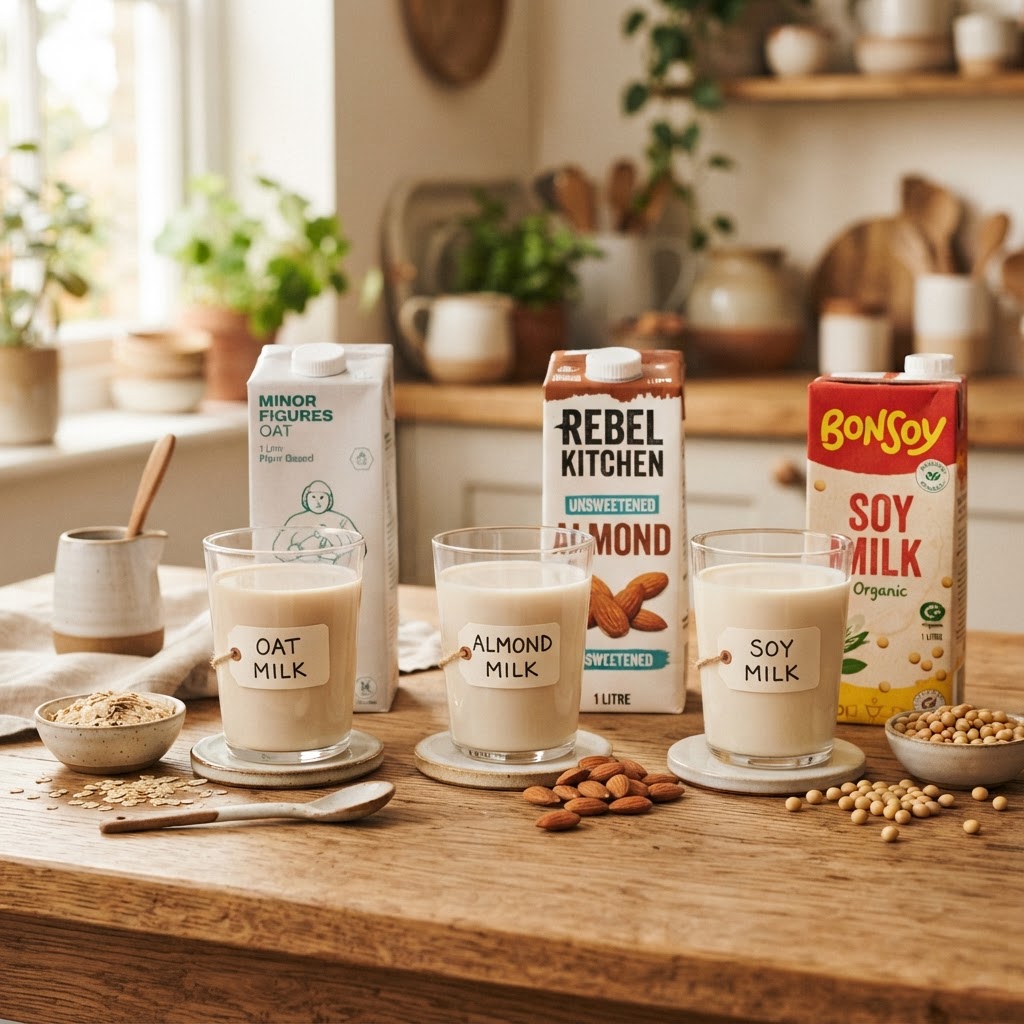
Soy Milk
A plant milk made from soaked, ground soybeans; the highest-protein common plant milk.
Texture: Smooth and pourable, close to dairy milk in body.
Flavor: Mildly beany but neutral in most recipes; flavor has improved a lot.
Richness: Medium — richer than almond, lighter than cream.
Best cooking uses: Excellent — its protein helps sauces and soups thicken and brown; a workhorse for savory cooking.
Best baking uses: Excellent — protein and neutral behavior make it one of the most reliable milks for baking.
Limitations: Contains soy (an allergen); some people dislike its flavor straight.
Beginner difficulty: Very easy🌾
Oat Milk
A plant milk made from blended oats; naturally creamy from oat starch.
Texture: Smooth and creamy, fuller-bodied than almond or soy.
Flavor: Mildly sweet and oaty; pleasant in coffee and cereal.
Richness: Medium-high — creamy without added fat.
Best cooking uses: Very good in soups, sauces, and mashed potatoes; choose unsweetened for savory.
Best baking uses: Good in most baking; the extra body helps tender baked goods.
Limitations: Formulations vary; sweetened or flavored oat milks carry sugar into savory dishes. Lower protein than soy.
Beginner difficulty: Very easy🌰
Almond Milk
A thin plant milk made from ground almonds and water.
Texture: Light and watery compared to dairy milk.
Flavor: Mildly nutty; fairly neutral in small amounts.
Richness: Low — thin and low in fat and protein.
Best cooking uses: Okay for light sauces and soups; may need thickening. Not ideal where richness matters.
Best baking uses: Works in many baked goods but adds little richness or browning; pick unsweetened.
Limitations: Thin and low in protein — not a 1:1 match where dairy milk’s body mattered. Nut allergen.
Beginner difficulty: Very easy🧀
Cashew Milk
A creamy plant milk made from blended cashews and water; often richer than almond.
Texture: Smooth and creamy, closer to dairy than almond.
Flavor: Mild and neutral with a faint sweetness.
Richness: Medium — creamier than almond, lighter than cashew cream.
Best cooking uses: Good in sauces, soups, and mashed potatoes; blends smoothly.
Best baking uses: Good in baked goods and desserts where a neutral creamy milk is wanted.
Limitations: Store-bought is often thin; homemade is richer. Tree-nut allergen.
Beginner difficulty: Very easy🥥
Coconut Milk (Canned)
Rich milk from pressed coconut; full-fat and thick, sold canned.
Texture: Thick and creamy; the fat separates and rises as a solid layer.
Flavor: Distinctly coconut — welcome in curries and tropical desserts, noticeable elsewhere.
Richness: High — very rich and fatty.
Best cooking uses: Excellent in curries, soups, and rich sauces where coconut fits; great for dairy-free ice cream.
Best baking uses: Good in dense baked goods and desserts; coconut flavor carries.
Limitations: Coconut flavor is unwanted in some savory or delicately flavored dishes. High in saturated fat.
Beginner difficulty: Easy🧀
Cashew Cream
Soaked cashews blended with water into a thick, pourable or spreadable cream; a homemade staple.
Texture: Smooth, silky, and creamy; thickness depends on the water ratio.
Flavor: Neutral and mild; takes on seasoning well.
Richness: High — rich and fatty from the cashews.
Best cooking uses: Excellent for creamy pasta sauces, soups, sour cream, and queso; the best homemade heavy-cream stand-in.
Best baking uses: Good in cheesecakes and creamy desserts; not for whipping.
Limitations: Needs a blender and soaked cashews; a tree-nut allergen. Won’t whip like dairy cream.
Beginner difficulty: Easy🥥
Coconut Cream
The thick, fatty layer from canned coconut milk, or sold as coconut cream; whips when chilled.
Texture: Very thick and scoopable; whips to soft peaks when cold.
Flavor: Strong coconut; good in desserts, sometimes unwanted in savory.
Richness: Very high — the richest common dairy-free cream.
Best cooking uses: Good where coconut fits — curries and rich desserts; can substitute heavy cream in some dishes.
Best baking uses: Excellent in desserts, ice cream, and whipped toppings; coconut flavor carries.
Limitations: Coconut flavor dominates delicate dishes; chilling is required to whip. High in saturated fat.
Beginner difficulty: Easy🧈
Vegan Butter
A plant-based fat made from oils (often coconut, olive, or sunflower) with water and emulsifiers, sold in sticks or tubs.
Texture: Solid when cold, spreadable, melts like dairy butter.
Flavor: Buttery and neutral; some taste lightly of olive or coconut.
Richness: High — full fat, like butter.
Best cooking uses: Excellent for sautéing, sauces, and finishing; a direct butter swap in most cooking.
Best baking uses: Excellent in sticks for cookies, cakes, and pastry; use a baking stick, not a soft spread, for pastry.
Limitations: Tub spreads are softer and higher in water than sticks — not ideal for pastry. Check labels for allergens.
Beginner difficulty: Very easy🥝
Vegan Yogurt
Cultured plant yogurt from soy, coconut, oat, almond, or cashew; tangy and creamy.
Texture: Smooth, thick, and spoonable; sets like dairy yogurt.
Flavor: Tangy and milky; varies by base — coconut tastes coconutty, soy is neutral.
Richness: Medium — lighter than sour cream.
Best cooking uses: Good in marinades, dressings, and sauces; stir into soups at the end.
Best baking uses: Works in quick breads and cakes for moisture and a little tang.
Limitations: Flavors vary; coconut and flavored yogurts can carry unwanted notes. Some thin when heated.
Beginner difficulty: Very easy🧈
Vegan Sour Cream
A cultured or oil-based plant sour cream, usually cashew, soy, or oat; tangy and thick.
Texture: Thick and spoonable, like dairy sour cream.
Flavor: Tangy and creamy; the closest dairy-sour-cream match.
Richness: Medium-high.
Best cooking uses: Excellent as a topping and stirred into soups and stews; swirled into sauces for tang.
Best baking uses: Works in coffee cakes and recipes that call for sour cream for moisture and tang.
Limitations: Brands vary in tang and texture; some split at a hard boil. Check labels for allergens.
Beginner difficulty: Very easy🥛
Plant-Based Heavy Cream
A commercial plant-based heavy-cream alternative (often oat, soy, or cashew with oil) built for richness and sometimes whipping.
Texture: Thick and pourable, close to dairy heavy cream; some whip.
Flavor: Neutral and creamy; designed to behave like heavy cream.
Richness: High — formulated for richness and body.
Best cooking uses: Excellent in creamy sauces, soups, and mashed potatoes; the most direct heavy-cream swap.
Best baking uses: Good in rich baked goods and desserts; check whether your brand whips if you need it.
Limitations: Brands vary in whip-ability and flavor; pricier than homemade cashew cream. Check labels for allergens.
Beginner difficulty: Very easy☕
Vegan Coffee Creamer
A plant-based creamer (oat, almond, soy, or coconut based) formulated for coffee; often richer than drinking milk.
Texture: Smooth and creamy; blends into hot and cold coffee.
Flavor: Neutral to lightly sweet; many flavors available.
Richness: Medium-high — designed to enrich coffee.
Best cooking uses: Okay in a pinch for creamy sauces; some are sweetened and flavored, so read the label for savory use.
Best baking uses: Not ideal for baking — often sweetened and flavored.
Limitations: Often sweetened or flavored, which can clash in savory cooking; not a general milk substitute.
Beginner difficulty: Very easy