Vegan Chickpea Curry
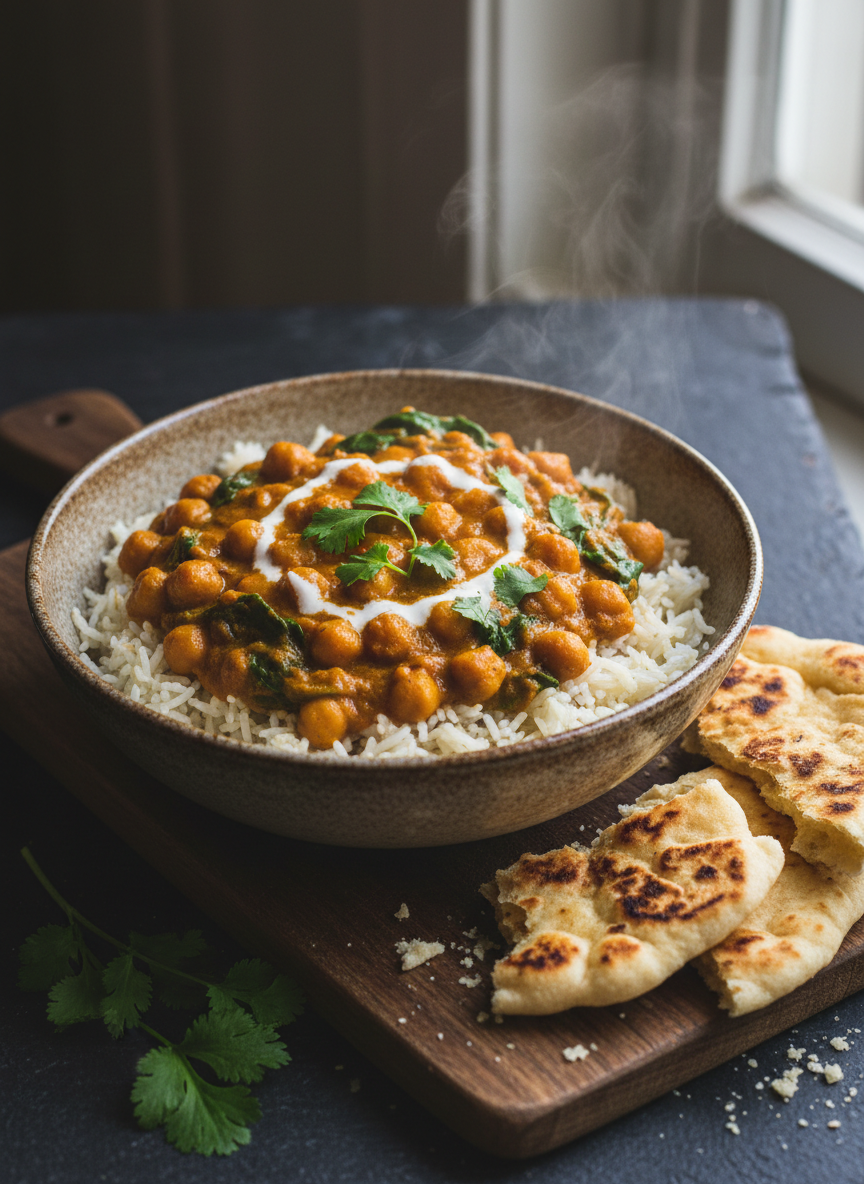
A rich, fragrant chickpea curry with spinach and coconut milk. Easy enough for a weeknight.
📋 Recipe
Ingredients
- 12 cans chickpeas, drained
- 21 can full-fat coconut milk
- 31 can diced tomatoes
- 43 cups fresh spinach
- 51 onion, diced
- 63 cloves garlic, minced
- 71 tbsp curry powder
- 81 tsp turmeric
- 91 tsp cumin
- 101 tsp garam masala
- 11Salt and fresh cilantro
Instructions
- 1
Sauté onion until golden. Add garlic and all spices, stir 30 seconds.
- 2
Add diced tomatoes and chickpeas. Simmer 10 minutes.
- 3
Pour in coconut milk. Stir and simmer 5 more minutes.
- 4
Add spinach, stir until wilted. Season with salt.
- 5
Serve over rice with fresh cilantro on top.
Nutrition (per serving)
18g
fat
10g
fiber
380
calories
40g
carbs
14g
protein
Vegan Chickpea Curry
This vibrant and aromatic vegan chickpea curry is a nutrient-dense, plant-based dinner that comes together in under 30 minutes, making it the perfect staple for busy weeknights.
Table of Contents
- Why You Will Love This Chickpea Curry
- Essential Ingredients
- How to Prepare the Perfect Curry
- Deep Dive: Nutritional Profile and Health Benefits
- Customizing Your Curry
- Comparison: Chickpea Curry vs. Other Legume Dishes
- Common Mistakes to Avoid
- Pro Tips for Success
- Frequently Asked Questions
- Key Takeaways
- Related Articles
Why You Will Love This Chickpea Curry
Chickpea curry, often known as chana masala, is a cornerstone of plant-based cooking. It relies on humble pantry staples that pack a massive nutritional punch. Because chickpeas are rich in fiber and plant-based protein, they provide sustained energy throughout the evening, ensuring you feel full and satisfied without feeling weighed down.
Beyond nutrition, the versatility of this dish is unmatched. Whether you are a beginner in the kitchen or an experienced home cook, this recipe offers a forgiving framework that welcomes experimentation. You can easily adjust the spice levels, add seasonal vegetables, or transform it into a creamy coconut-based sauce depending on your preferences. It is also an excellent option for meal prep, as the flavors often deepen after sitting in the refrigerator overnight. Unlike many recipes that rely on heavy cream or butter, this curry achieves a luxurious texture through careful simmering and the use of coconut milk or pureed vegetables, making it inherently dairy-free and heart-healthy.
Essential Ingredients
To create a truly authentic flavor profile, you need a balance of aromatics, spices, and a creamy base. Start with high-quality canned chickpeas, ensuring they are well-rinsed to remove excess sodium. The base aromatics consist of finely diced yellow onion, fresh garlic, and grated ginger, which create the foundational "holy trinity" of many curry recipes. For the best result, chop your onions to a uniform size to ensure they soften at the same rate.
For the spice blend, prioritize freshly ground turmeric, cumin, coriander, and garam masala. While you can use a pre-mixed curry powder, sourcing these individual spices adds a layer of depth that pre-mixed blends often lack. Turmeric provides the signature golden hue and a dose of anti-inflammatory compounds. Cumin brings an earthy, smoky base, while coriander adds a subtle citrusy sweetness. Garam masala, a warming blend typically containing cinnamon, cardamom, cloves, and black pepper, should be added at the end of the cooking process to preserve its complex, aromatic oils. If you prefer a tomato-based curry, use canned crushed tomatoes or fresh diced Roma tomatoes. For a creamier finish, a half-cup of full-fat coconut milk acts as the perfect binding agent, mellowing out the intensity of the spices.
How to Prepare the Perfect Curry
Begin by heating a heavy-bottomed pot or Dutch oven over medium heat with a splash of avocado oil or vegetable broth for sautéing. Add the onions, cooking them until they are translucent and slightly caramelized, which adds a natural sweetness that balances the acidity of the tomatoes. Add the garlic and ginger during the last minute of sautéing to prevent burning, as these aromatics turn bitter quickly if overheated.
Once the aromatics are fragrant, stir in your spices, allowing them to toast for about 30 seconds. This step is crucial; it releases the essential oils within the spices, heightening their aroma. Pour in your tomatoes and chickpeas, simmering the mixture for at least 15 to 20 minutes. If you want a thicker texture, use the back of your wooden spoon to lightly mash a small portion of the chickpeas against the side of the pot, letting them release their starches into the sauce. This technique, known as mounting the sauce, creates a restaurant-style gravy without needing thickeners like cornstarch or flour. Once thickened, stir in your liquid component—be it coconut milk or a splash of vegetable stock—and let it warm through for an additional five minutes. Taste the curry immediately before removing it from the heat, adjusting for salt, acidity, or spice levels.
Deep Dive: Nutritional Profile and Health Benefits
Chickpeas, or garbanzo beans, are nutritional superstars. A single cup of cooked chickpeas provides approximately 14.5 grams of protein and 12.5 grams of fiber. This combination is essential for blood sugar regulation and digestive health. Because this curry is entirely plant-based, it is naturally cholesterol-free and low in saturated fat, provided you use modest amounts of coconut milk.
The inclusion of turmeric is particularly noteworthy. Curcumin, the active compound in turmeric, has been linked to numerous health benefits, including enhanced antioxidant capacity and improved heart health. When paired with black pepper (usually found in garam masala blends), the absorption of curcumin is significantly increased. By integrating fresh ginger and garlic, you are also adding potent antimicrobial and anti-inflammatory properties to your meal. Furthermore, this dish provides essential minerals like iron, manganese, and folate, which support energy production and cellular function. Serving this curry with brown rice or quinoa further enhances the fiber content, making it a complete protein meal that keeps you satiated for hours.
Customizing Your Curry
One of the best features of vegan curry is its adaptability. During the final five minutes of cooking, feel free to toss in a handful of fresh baby spinach or kale. These greens wilt quickly and add a dose of iron and vitamins to the dish. If you enjoy a bit of crunch, consider adding cauliflower florets or bell peppers at the beginning of the cooking process for a heartier meal. For a protein boost, you can stir in cooked lentils or cubes of firm tofu.
For those who prefer a more indulgent experience, serve the curry over a bed of fluffy jasmine rice, quinoa, or with a side of warm vegan naan. A squeeze of fresh lime juice right before serving cuts through the richness of the coconut milk, providing a necessary brightness that elevates the entire dish. Fresh cilantro is the traditional topping, but chopped parsley or Thai basil also work beautifully. You can also experiment with heat levels by adding diced fresh green chilies during the aromatics stage or a pinch of red chili flakes for a slower, lingering burn.
Comparison: Chickpea Curry vs. Other Legume Dishes
| Feature | Chickpea Curry | Lentil Soup | Black Bean Tacos |
|---|---|---|---|
| Texture | Hearty & Firm | Creamy & Soft | Meaty & Dense |
| Cook Time | 20-30 mins | 45-60 mins | 15 mins |
| Primary Flavor | Warm & Spiced | Earthy & Savory | Tangy & Zesty |
| Meal Type | Main Entree | Stew/Soup | Handheld/Appetizer |
| Fiber Content | High | High | Very High |
Common Mistakes to Avoid
One of the most frequent mistakes beginners make is under-seasoning. Because chickpeas are naturally neutral in flavor, they rely heavily on the spice base. Do not be afraid to taste as you go, adding a pinch more salt or spice as needed. If the curry tastes flat, a tiny splash of apple cider vinegar, rice vinegar, or freshly squeezed lemon juice can often "awaken" the flavors instantly by providing the acidity necessary to balance the starch of the chickpeas.
Another error is using chickpeas that are too mushy. If you are using canned chickpeas, be careful not to over-boil them, as they can lose their structure and become mealy. For optimal texture, add the chickpeas only after the tomato base has simmered for a few minutes. Additionally, many cooks add salt too early, which can sometimes toughen the skins of legumes; consider seasoning toward the middle or end of the simmering process. If you prefer a very smooth sauce, blend half of the chickpeas with the coconut milk and tomatoes before adding the rest back into the pot for a texturally varied experience.
Pro Tips for Success
- The Sizzle Factor: Always bloom your spices in the oil for 30 seconds before adding liquids. This unlocks fat-soluble flavor compounds that simply won't release in water.
- Prep Ahead: Chop your onions, garlic, and ginger in advance to make the cooking process seamless. Using a food processor to pulse the onion and ginger into a paste can save time and ensure the base of your sauce is perfectly uniform.
- Storage: This dish keeps perfectly in the refrigerator for up to 4 days and actually tastes better on the second or third day as the spices have more time to permeate the chickpeas.
- Freezer Friendly: You can freeze this curry in airtight containers for up to 3 months; just remember to leave room at the top for expansion. Thaw overnight in the fridge and reheat on the stovetop with a splash of water to refresh the consistency.
- Balance the Heat: If the curry is too spicy, add a dollop of dairy-free coconut yogurt or extra coconut milk to cool it down. Sugar is not recommended to cut heat, as it changes the flavor profile entirely.
- Aromatic Enhancers: A pinch of cinnamon or a bay leaf added during the simmering process can provide a subtle, restaurant-quality warmth to the dish.
Frequently Asked Questions
Q1: Can I use dried chickpeas instead of canned? A1: Yes, but you must soak them overnight and boil them until tender before starting the curry process. Using canned is simply more convenient for a 30-minute meal. Q2: Is this recipe gluten-free? A2: Yes, this recipe is naturally gluten-free, provided you ensure your spices are processed in a gluten-free facility and you avoid serving it with traditional wheat-based naan. Q3: Can I make this in an Instant Pot? A3: Absolutely, simply follow the sauté steps directly in the pot, add your liquids, and pressure cook for 8 minutes with a natural release for the best texture. Q4: What is the best side dish to pair with this? A4: Steamed basmati rice, quinoa, or garlic-rubbed grilled flatbread are excellent accompaniments to soak up the flavorful sauce. Q5: Can I substitute the coconut milk? A5: Yes, if you prefer a lighter sauce, you can use plain soy milk or even just a bit of blended cashews and water to achieve creaminess without the coconut flavor. Q6: Why is my curry bitter? A6: This usually happens if the garlic, ginger, or spices were burnt during the initial sauté phase. Ensure your heat is on medium-low and use a splash of water if the pan gets too dry.
Key Takeaways
Vegan chickpea curry is a nutritional powerhouse that proves healthy eating doesn't have to be complicated or time-consuming. By mastering the art of sautéing aromatics, blooming spices, and balancing acidity, you can create restaurant-quality meals in your own kitchen. Remember that consistency and quality of ingredients are the keys to a truly memorable plant-based dish. This recipe serves as a versatile base that can be customized with seasonal vegetables or protein additions, making it a reliable staple for any home cook looking to improve their repertoire of plant-based recipes.
Related Articles
- 25 Cheap Vegan Meals
- Affordable Vegan Pantry Staples
- Easy Vegan Meal Prep Ideas
- Vegan Pantry Staples: The Ultimate Guide to Building Your Kitchen
Newsletter
Join our community of passionate plant-based home cooks! Sign up for the Vegan Foodies newsletter to receive weekly meal plans, exclusive recipes, and expert tips delivered directly to your inbox. It is the easiest way to stay inspired and keep your kitchen thriving with healthy, delicious options.
Conclusion
Making vegan chickpea curry at home is a rewarding experience that combines health benefits with incredible flavor. Whether you are a seasoned vegan or just starting to explore plant-based cooking, this recipe offers a delicious and reliable foundation for your weekly meal rotation. We hope you enjoy this hearty dish as much as we do—happy cooking!
Enjoying this guide?
Browse our favorite recommended vegan products and kitchen essentials.
View Recommended Products →You Might Also Like
Plant-based Supplements: A Complete Guide to Optimizing Your Vegan Nutrition
Explore the essential plant-based supplements to support your health. Learn what to look for in vitamins, minerals, and proteins to fuel your vegan lifestyle.
Vegan Air Fryer Recipes
Discover delicious, healthy, and easy vegan air fryer recipes. From crispy tofu to roasted vegetables, master your appliance with these plant-based meal ideas.
Vegan Comfort Food
Discover the best vegan comfort food recipes, from creamy pastas to hearty stews. Indulge in delicious, plant-based classics without the guilt!
Vegan Pantry Staples
Learn how to build a fully stocked vegan pantry. Discover essential dry goods, canned items, and healthy ingredients for delicious, plant-based cooking.

The Ultimate Vegan Foodies Coloring Book
Beautiful Plant-Based Designs to Color
Relax and unwind with beautifully detailed illustrations inspired by fruits, vegetables, herbs, flowers, and wholesome plant-based living. Perfect for stress relief, mindfulness, and creative fun.
by Trivia Ape