Vegan Grain Bowl Roasted Veggies
A nourishing grain bowl with farro, roasted sweet potato, kale, and a lemon-tahini dressing.
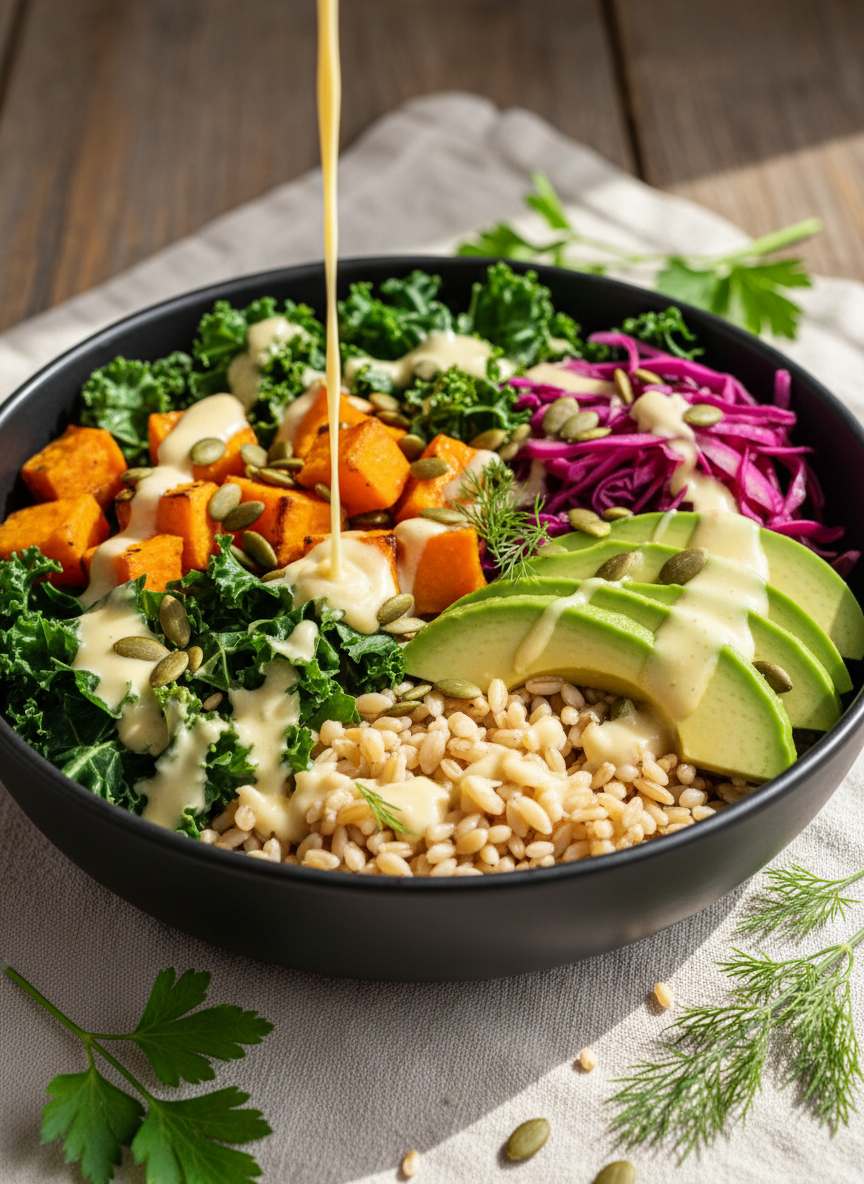
📋 Recipe
Ingredients
- 12 cups farro (cooked)
- 22 cups massaged kale
- 31 large sweet potato, cubed
- 41 cup roasted chickpeas
- 51/2 cup shredded carrot
- 61/4 cup pumpkin seeds
- 7For dressing: 3 tbsp tahini, juice of 1 lemon, 1 clove garlic, 2 tbsp water, salt
Instructions
- 1
Cook farro according to package directions.
- 2
Roast cubed sweet potato at 425°F for 25 minutes.
- 3
Massage kale with a pinch of salt and drizzle of olive oil.
- 4
Make dressing: whisk tahini, lemon juice, garlic, water, and salt.
- 5
Assemble bowls: farro, kale, sweet potato, chickpeas, carrots, pumpkin seeds.
- 6
Drizzle with tahini dressing and serve.
Nutrition (per serving)
12g
fat
10g
fiber
390
calories
58g
carbs
15g
protein
Vegan Grain Bowl Roasted Veggies
A delicious, nutrient-packed vegan grain bowl featuring perfectly roasted seasonal vegetables and a savory tahini-lemon dressing. This easy-to-follow guide shows you how to build the perfect plant-based meal.
Table of Contents
- Introduction
- The Components of a Perfect Grain Bowl
- Choosing Your Base Grains
- Selecting and Prepping Vegetables
- Roasting Techniques for Maximum Flavor
- Creating the Ultimate Vegan Sauce
- Protein Boosters for Your Bowl
- How to Assemble Your Bowl
- Common Mistakes to Avoid
- Nutritional Profile and Health Benefits
- Storage, Meal Prep, and Leftover Tips
- Frequently Asked Questions
- Related Articles
- Newsletter
- Conclusion
Introduction
Finding a reliable, healthy, and satisfying meal can often feel like a challenge in a busy world. The vegan grain bowl with roasted veggies serves as a culinary canvas that is both flexible and deeply nourishing. By combining hearty grains, vibrant roasted produce, and protein-rich legumes, you create a balanced meal that supports sustained energy throughout your day.
This guide explores the art of crafting the perfect bowl from the comfort of your kitchen. We will walk through the essential elements—from grain selection to the secret behind perfectly caramelized vegetables. Whether you are a long-time vegan or simply looking to incorporate more plant-based meals into your routine, this approach offers simplicity without sacrificing depth of flavor.
The Components of a Perfect Grain Bowl
A successful grain bowl relies on the harmony of textures and flavors. When you balance a chewy grain, tender roasted vegetables, and a creamy, acidic sauce, the result is restaurant-quality food at home. It is helpful to think of these bowls as a formula rather than a rigid recipe, allowing you to swap ingredients based on what you have in your pantry.
The anatomy of a great bowl usually includes four key parts: a base, roasted vegetables, a healthy fat source, and a flavorful dressing. Understanding this structure empowers you to experiment with various flavor profiles, such as Mediterranean, Southwestern, or Asian-inspired combinations. By mastering the fundamentals, you ensure that every meal remains exciting and fresh.
Choosing Your Base Grains
Your grain choice forms the foundation of your meal. For the best experience, aim for whole grains that offer a bit of chewiness, which adds to the overall satiety. Quinoa is a perennial favorite because it is a complete protein and cooks very quickly, but farro, brown rice, and buckwheat also provide wonderful nutty notes that pair beautifully with roasted produce.
When cooking your grains, try using vegetable broth instead of plain water to infuse deeper flavor into the base of your dish. Rinsing your grains thoroughly before cooking can also help prevent them from becoming overly gummy, ensuring the texture remains light and pleasant. You can also mix grains—such as a 50/50 blend of wild rice and quinoa—to create more complexity in every bite.
| Grain | Cooking Ratio (Grain:Liquid) | Texture Profile |
|---|---|---|
| Quinoa | 1 : 2 | Light and fluffy |
| Farro | 1 : 3 | Chewy and nutty |
| Brown Rice | 1 : 2.5 | Firm and earthy |
| Buckwheat | 1 : 2 | Soft and hearty |
Selecting and Prepping Vegetables
To achieve the best results, select vegetables that roast well together. Hardy vegetables like sweet potatoes, carrots, broccoli, and cauliflower are excellent choices because they develop a natural sweetness during the roasting process. You can also include red onion, zucchini, and bell peppers for a more vibrant color palette.
Preparation is key to even roasting. Ensure that you cut your vegetables into uniform, bite-sized pieces so they cook simultaneously. Toss your prepped vegetables in high-quality olive oil and your favorite seasonings—such as smoked paprika, garlic powder, or dried oregano—to ensure they are well-coated before entering the oven. This small step ensures that each piece is perfectly seasoned and browned.
Roasting Techniques for Maximum Flavor
The secret to delicious roasted vegetables is high heat. Set your oven to 400°F (200°C) to facilitate caramelization. Spreading your vegetables in a single layer on a large baking sheet is essential; overcrowding the pan will lead to steaming instead of roasting, which prevents those crisp edges we all love.
Pro Tip: The Sheet Pan Strategy
If you are cooking a large batch, do not be afraid to use two baking sheets. Crowded pans lead to soft, mushy vegetables rather than the golden, crispy results you want. Ensure there is at least an inch of space between vegetable pieces for the best airflow.
Rotate your baking sheets halfway through the cooking process to ensure even browning. If you notice some vegetables are thinner than others, such as sliced peppers compared to chunky sweet potatoes, stagger your roasting times. Add the more delicate vegetables during the last ten minutes of cooking to keep them from burning while the heartier items reach full tenderness.
Creating the Ultimate Vegan Sauce
A sauce ties your grain bowl together. A classic tahini-lemon dressing is a staple, providing a creamy texture and a bright, citrusy finish that cuts through the earthiness of the roasted vegetables. To make this, whisk together equal parts tahini, fresh lemon juice, and a splash of maple syrup for balance, then add warm water one tablespoon at a time until you reach your desired consistency.
Alternatively, consider a green herb sauce using blended cilantro, avocado, and lime, or a spicy peanut satay sauce. The acidity in these dressings is crucial for "waking up" the flavors of the roasted vegetables and grains. Always taste your sauce before serving to adjust the salt, acid, or spice level to your preference.
Protein Boosters for Your Bowl
Adding plant-based protein ensures your meal keeps you full for hours. Chickpeas are a versatile choice—you can roast them right alongside your vegetables for a satisfying crunch. Black beans, edamame, and tempeh are also excellent additions that provide distinct textures and flavor profiles.
Consider marinating tofu or tempeh in soy sauce and ginger before baking, which creates a deep, umami-rich flavor that pairs perfectly with roasted carrots and broccoli. By layering these proteins into your bowls, you transform a side dish into a complete, balanced entrée that sustains your energy levels throughout the afternoon.
How to Assemble Your Bowl
Assembly is where your artistic side can shine. Start by scooping your cooked grains into the base of your bowl, then arrange your roasted vegetables in sections on top. This presentation not only looks beautiful but also helps you keep track of which flavors you are combining.
Step-by-Step Assembly:
- Base Layer: Spoon your cooked grain (quinoa, farro, etc.) into the bottom of a wide, shallow bowl.
- Roasted Veggies: Place the roasted vegetables in "clusters" or sections around the grain.
- Protein Addition: Add a generous scoop of chickpeas, tofu, or tempeh on the side.
- Fresh Elements: Add a handful of greens (arugula, spinach) or raw crunchy veggies (cucumber, radish).
- The Garnish: Sprinkle with toasted nuts, seeds, or fresh herbs.
- The Drizzle: Finish with a generous pour of your prepared vegan sauce.
Common Mistakes to Avoid
One of the most common mistakes is not seasoning each layer properly. While the dressing is flavorful, seasoning the grains with a pinch of salt and the vegetables with spices ensures that every element of the dish is delicious on its own. Additionally, avoid using too much oil; a light coating is enough to promote browning without making the bowl feel heavy or greasy.
Another frequent error is skipping the resting period for roasted vegetables. Allow them to cool for just a minute or two after leaving the oven so they firm up slightly, which makes them easier to arrange. Also, avoid adding fresh, delicate greens like spinach or kale until the very end; otherwise, they will wilt too aggressively from the heat of the roasted veggies.
Nutritional Profile and Health Benefits
Vegan grain bowls are nutritional powerhouses. By combining complex carbohydrates from whole grains with fiber-rich roasted vegetables and plant-based protein, you create a meal that offers a slow release of energy.
- Fiber Content: Using brown rice or quinoa provides significant amounts of dietary fiber, aiding digestion.
- Micronutrients: Roasted root vegetables are high in Vitamin A, Vitamin C, and potassium, which support immune function and skin health.
- Heart Health: Tahini is rich in monounsaturated fats, which are heart-healthy and help your body absorb fat-soluble vitamins from the vegetables.
Storage, Meal Prep, and Leftover Tips
Grain bowls are ideal for those who practice weekly meal prep. To keep your food fresh, avoid assembling the bowls until you are ready to eat.
- Storage Containers: Glass airtight containers are best for storing components. Keep the dressing in a small, separate container to avoid soggy grains.
- Keeping Grains Fresh: If you are storing grains for longer than two days, keep them slightly damp by adding a splash of water or vegetable broth before reheating.
- Reheating: For the best results, reheat the grain and vegetable base for 60-90 seconds in the microwave, then add your cold ingredients and dressing afterward. This preserves the contrast between the hot, roasted items and the cool, crunchy extras.
Frequently Asked Questions
Q1: Can I prep these grain bowls ahead of time? A1: Yes, these bowls are excellent for meal prep. Store the roasted vegetables, grains, and dressing in separate containers and assemble them when you are ready to eat. Q2: What is the best way to keep the grains from drying out? A2: Store your cooked grains with a small amount of vegetable broth or a teaspoon of oil to keep them hydrated while refrigerated. Q3: How long do roasted vegetables stay good in the fridge? A3: They typically last for three to four days when stored in an airtight container. Q4: Can I use frozen vegetables instead of fresh? A4: While fresh is better for roasting, frozen broccoli or cauliflower can be used if thawed and patted very dry before roasting at high heat. Q5: Can I substitute the tahini for a nut-free option? A5: Absolutely! Sunflower seed butter is a fantastic nut-free alternative that mimics the creamy, earthy profile of tahini perfectly. Q6: How can I add more "crunch" if I don't want seeds? A6: Try adding toasted chickpeas or baked tofu cubes. They offer a satisfying snap without requiring raw ingredients.
Related Articles
- Nutritious Vegan Salad Dressings
- Guide to Essential Vegan Pantry Staples
- Healthy Plant-Based Meal Prep Tips
Newsletter
Stay inspired with our latest plant-based recipes and culinary tips. Sign up for our weekly newsletter to receive exclusive health-focused guides, cooking tutorials, and seasonal produce spotlights directly to your inbox. Join our community of food lovers today.
Conclusion
Creating a vegan grain bowl with roasted veggies is a simple way to elevate your daily nutrition while enjoying vibrant, comforting flavors. By focusing on quality grains, high-heat roasting, and a balanced, zesty dressing, you can turn humble ingredients into a spectacular meal that satisfies every craving.
We encourage you to experiment with different seasonal vegetables and protein sources to find your perfect bowl. Embrace the process, have fun with your flavor combinations, and enjoy the wholesome, plant-based fuel that keeps you feeling your best.
Enjoying this guide?
Browse our favorite recommended vegan products and kitchen essentials.
View Recommended Products →You Might Also Like
Plant-based Supplements: A Complete Guide to Optimizing Your Vegan Nutrition
Explore the essential plant-based supplements to support your health. Learn what to look for in vitamins, minerals, and proteins to fuel your vegan lifestyle.
Vegan Air Fryer Recipes
Discover delicious, healthy, and easy vegan air fryer recipes. From crispy tofu to roasted vegetables, master your appliance with these plant-based meal ideas.
Vegan Comfort Food
Discover the best vegan comfort food recipes, from creamy pastas to hearty stews. Indulge in delicious, plant-based classics without the guilt!
Vegan Pantry Staples
Learn how to build a fully stocked vegan pantry. Discover essential dry goods, canned items, and healthy ingredients for delicious, plant-based cooking.
The Ultimate Vegan Foodies Coloring Book
Beautiful Plant-Based Designs to Color
Relax and unwind with beautifully detailed illustrations inspired by fruits, vegetables, herbs, flowers, and wholesome plant-based living. Perfect for stress relief, mindfulness, and creative fun.
by Trivia Ape